
Hitting the Ground Running: A New Performance Director Looks Ahead to Rio
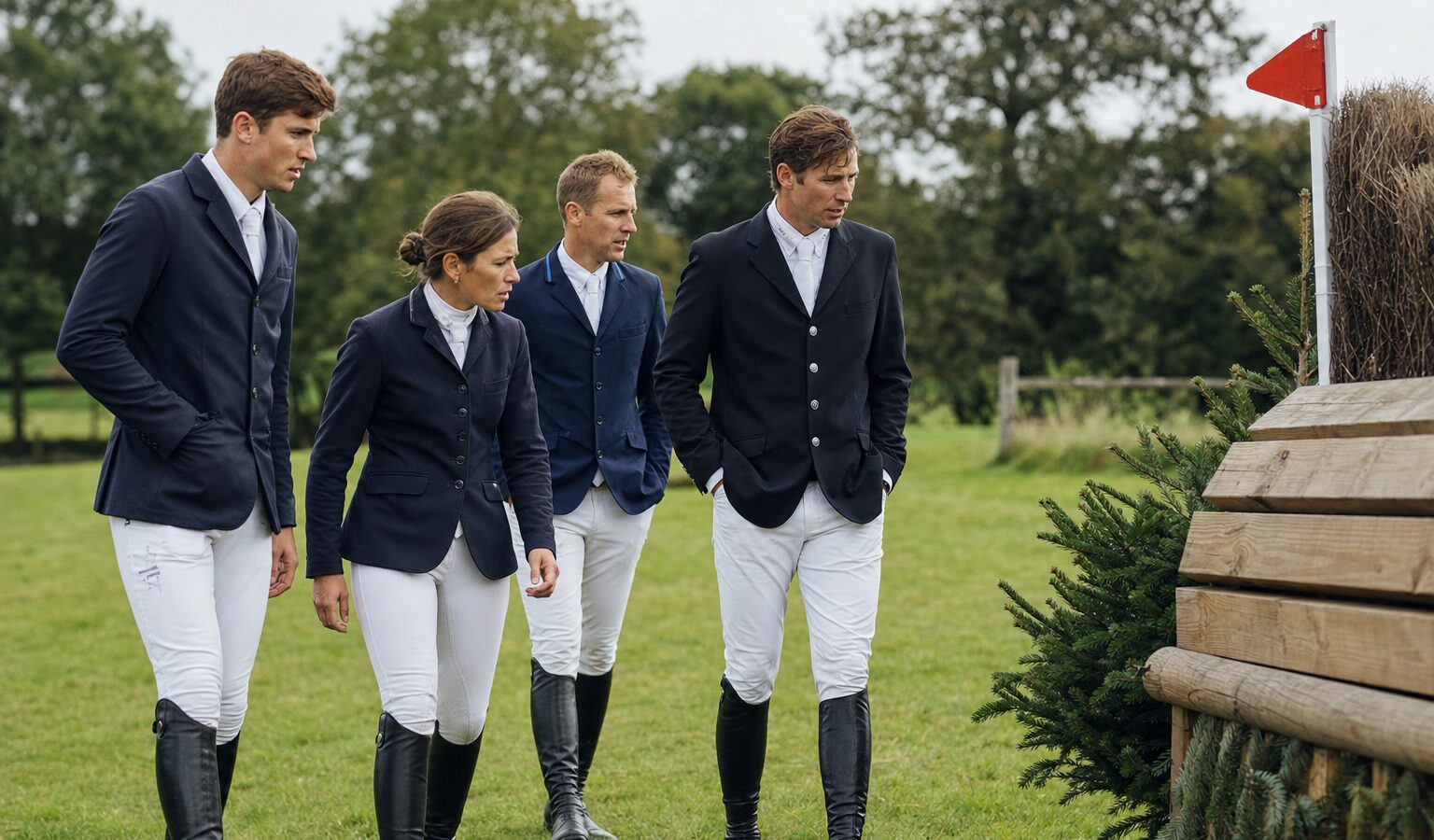
Dan Hughes used his first blog as the British Equestrian Federation’s Performance Director to set out his early impressions of the role, written at the close of a busy first three months in post. Having spent 25 years in the Army before taking up the position, he noted that he had handed in his military uniform and identity card and swapped it for the blue kit supplied by long-standing Team GBR partner Toggi.
His arrival came with the countdown to the Rio 2016 Olympic and Paralympic Games drawing closer, and with the first of the summer’s European Championships only six weeks away. He paid tribute to the World Class Programme staff, managers, coordinators, coaches, doctors, vets, farriers and physios, crediting their knowledge for an easy settling-in period and recognising the way they had held the programme together since the departure of Will Connell the previous year.
A strong start to 2015
The 2015 competition season had gone well for Team GBR. At the time of writing, World Class Programme riders held the world number one ranking in all three Olympic disciplines: Charlotte Dujardin in dressage, Scott Brash in jumping and William Fox-Pitt in eventing. Dujardin and Valegro had successfully defended their FEI World Cup Dressage title, Fox-Pitt had won a second Badminton title on the stallion Chilli Morning, and Brash had made history at Aachen by becoming the first rider to win two of the three legs of the Rolex Grand Slam, aboard Hello Sanctos.
Despite those results, Hughes stressed there was no room for complacency. He pointed to the challenge of securing Olympic qualification for the jumping team at the European Championships in Aachen. New Jumping Performance Manager Di Lampard had made a positive start, with her squads taking three wins from five in the Furusiyya FEI Nations Cup rounds at La Baule, Rome and Rotterdam, ahead of the final legs at Hickstead and Dublin.
In dressage, he expressed regret at the sale of European and Olympic squad hopeful Half Moon Delphi, ridden for the previous five years by Michael Eilberg, to a new American owner. He used the moment to underline the importance of owners to the sport and signalled his intention to look at how new owners might be encouraged into equestrian sport and how existing ones might be better supported.
Selection and the road to Rio
The process to select athletes and horses for the European Championships was already under way across the disciplines. The vaulting team, headed by Hannah Eccles and Lucy Phillips, had been announced and would compete alongside dressage, jumping, reining and driving athletes in Aachen in August, with eventing and para-dressage to follow in September at Blair Castle and Deauville respectively. Eventing selection was expected to take longer, with up to twelve horse-and-rider places available at a home championship and strong competition for them.
Hughes also confirmed that he would lead a team of observers to the equestrian test event in Rio at the beginning of August, accompanied by Yogi Breisner, who was preparing for what would be his sixth Olympic Games. No British horses or athletes would compete at the test event, which was run as an eventing CIC two-star; instead the trip would be used to evaluate the environment and gather insights ahead of the Games.
Reflecting on the wider picture, he referenced discussion at the FEI Sports Forum in April about the future of the sport and the need to maintain the relevance of the equestrian disciplines within the Olympic movement. Universality, popularity across media, equality and youth engagement were highlighted as priorities, with British Dressage, British Eventing and British Showjumping all working together on the sport’s direction. Looking back to the success of London 2012, he described Rio 2016 as a daunting prospect, noting that it is often harder to stay at the top than to get there as other nations raise their own standards.